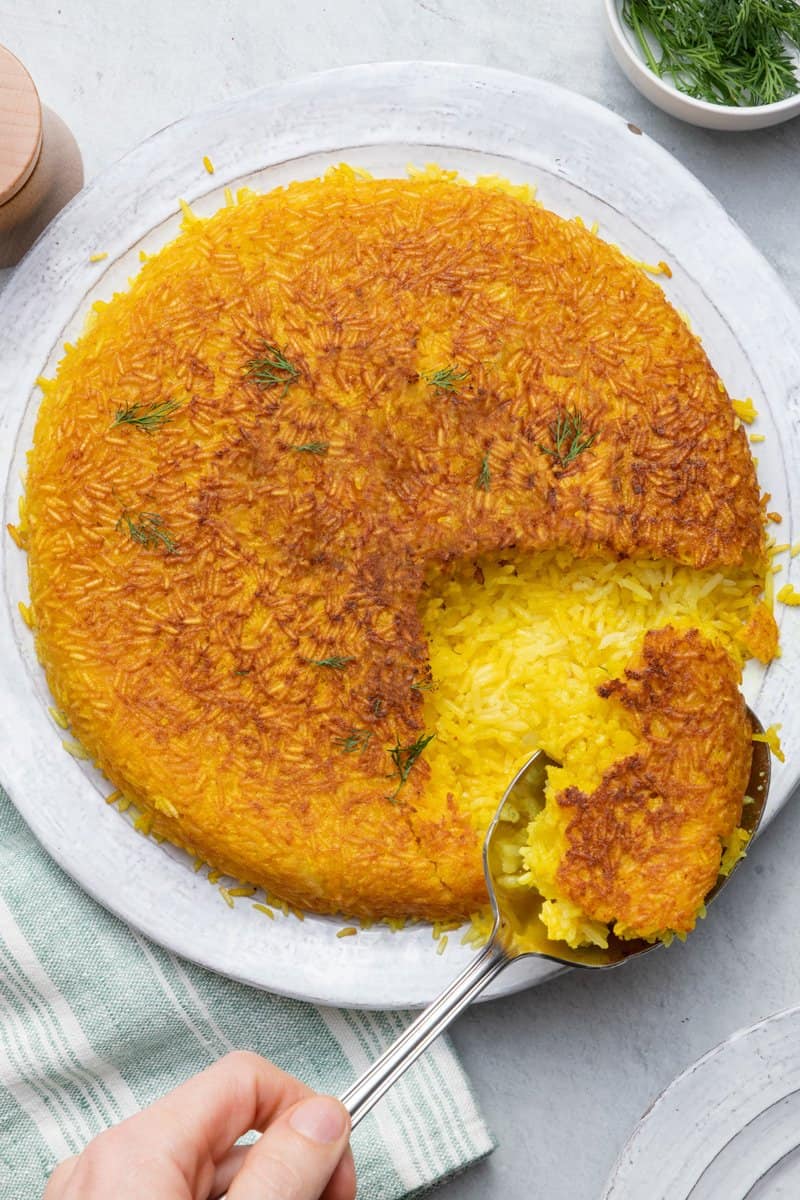
In the vibrant tapestry of Persian cuisine, where aromatic spices meet tender meats and fragrant rice, one dish stands out as a true culinary jewel: Tahdig. More than just a side dish, this iconic Persian crispy rice is a testament to culinary artistry, a coveted treasure that transforms a simple meal into an unforgettable experience. Literally translating to "bottom of the pot" (tah meaning bottom, dig meaning pot), Tahdig is precisely that – a gloriously deep, golden, caramelized crust of rice formed at the base of the cooking vessel, celebrated for its irresistible crunch and rich flavor.
For those who cherish the crispy edges of a potato gratin or the crunchy bits of a baked casserole, Tahdig is a dream come true. It’s a dish that intentionally focuses on and elevates that sought-after texture to an art form. With humble ingredients and a masterful technique, this Iranian delicacy has captivated hearts and palates for generations, often sparking playful competition among family members to claim the largest, most perfect piece.
What is Tahdig? Unearthing the Culinary Gem
At its heart, Tahdig is the quintessential Persian crispy rice, a dish that masterfully plays with contrasts. While the majority of the rice in the pot steams to fluffy, tender perfection, the magic happens at the very bottom. Here, through precise heat management, a thin, buttery, golden crust develops. This layer, the Tahdig itself, is a symphony of textures and flavors – deeply caramelized, incredibly crisp, and imbued with the subtle aromas of saffron and rich dairy.
The allure of Tahdig lies not just in its taste but in its presentation and the anticipation it builds. The dramatic reveal, as the pot is inverted onto a platter, showcasing the perfectly formed golden disc, is often met with gasps of delight. It's a dish that embodies the generosity and warmth of Persian hospitality, a symbol of a cook's skill and dedication. Indeed, many first-timers describe the experience of tasting Tahdig as a "life-altering gustatory experience," a testament to its profound impact on the senses.
While the most classic form involves rice, saffron, yogurt, and egg, the term "Tahdig" isn't exclusively limited to just rice. In broader Persian culinary tradition, it refers to any crispy layer formed at the bottom of the pot. This could be potatoes, slices of bread, or even other grains. However, the saffron-infused rice version remains the undisputed king, a dish revered as the "holy grail" or "pièce de résistance" of Persian cooking.
The Science and Art Behind the Perfect Persian Crispy Rice
Crafting the perfect Tahdig is a delicate balance of science and artistry, where each ingredient plays a crucial role in achieving that coveted golden crunch. The core principle involves cooking a layer of seasoned rice directly against a heat source, allowing it to brown and crisp, while the rice above it simultaneously steams to ideal fluffiness. This dual cooking method is what makes Tahdig so unique and beloved.
The foundation of any great Tahdig begins with the rice itself. Basmati rice is traditionally preferred for its long grains, aromatic qualities, and ability to cook up light and separate, which is essential for both the crispy layer and the fluffy top. Other long-grain white rices can work, but basmati delivers the most authentic texture and aroma. The rice is typically par-boiled and then rinsed to remove excess starch, ensuring each grain is distinct.
Key to the signature golden hue and intoxicating fragrance is saffron. This precious spice, steeped in warm water, infuses the rice with its delicate floral notes and imparts a rich, vibrant color. While expensive, its unique flavor profile is irreplaceable, elevating the Tahdig from merely crispy rice to a luxurious culinary statement. Cheaper substitutes like turmeric might offer color but lack saffron's complex aroma.
The secret to the Tahdig's exceptional crispiness and rich browning often lies in the combination of yogurt and egg yolk. Plain natural or Greek yogurt (full-fat for the best results) contributes to the caramelization and offers a subtle tang, while the egg yolk acts as a binding agent, helping the rice grains adhere together to form a solid, cohesive crust. If yogurt is omitted, full-fat milk can be used, but many find yogurt yields the crispiest results. Along with a neutral cooking oil (or a combination of butter and oil/ghee), these ingredients create a rich, fatty base that facilitates browning without burning. Salt, of course, seasons the rice to perfection.
Understanding the interplay of these components is crucial for success. For a deeper dive into how these ingredients come together to form that exquisite crust, you might find invaluable insights in our article, Secrets to Crispy Tahdig: Saffron, Yogurt, and the Perfect Crust.
Beyond the Classic: Exciting Tahdig Variations
While the classic saffron-infused Persian crispy rice remains the most popular and revered form of Tahdig, the dish’s versatility allows for a myriad of delicious variations. The fundamental concept of creating a crispy layer at the bottom of the pot can be applied to many ingredients, offering different textures and flavors to explore.
- Potato Tahdig: A wonderfully popular alternative, this version involves thinly sliced potatoes (often par-boiled) layered at the bottom of the pot before the rice is added. The potatoes crisp up to a golden, tender-on-the-inside, crunchy-on-the-outside delight, often seasoned with a sprinkle of turmeric or saffron for color.
- Bread Tahdig: Another beloved variation uses flatbreads like lavash or even regular tortillas placed at the bottom of the pot. These crisp up beautifully, offering a different kind of crunch – often flakier and more delicate than rice. The bread absorbs the flavors of the cooking rice and fats, becoming incredibly savory.
- Vegetable & Meat Tahdigs: Beyond potatoes, some versions incorporate other vegetables like tomatoes or even greens. When meat, particularly chicken, is layered with the rice and crisped, the dish technically transitions into Tahchin – a more elaborate rice casserole where the crispy bottom is often an integral part of a layered, savory dish. This demonstrates that while Tahdig is often rice, it’s truly about the methodology of achieving that glorious, crunchy bottom layer, no matter the foundation.
Each variation offers a unique texture and flavor profile, yet all share the common goal of delivering that coveted crispy, caramelized crust. Experimenting with these options allows home cooks to personalize their Tahdig experience and discover new favorites within the rich tradition of Persian cuisine.
Mastering Your Own Persian Crispy Rice: Tips for Success
While the concept of Tahdig seems simple, achieving that perfect, uniform golden crust requires attention to detail and a touch of patience. Don't be discouraged if your first attempt isn't flawless; like any culinary art, practice makes perfect. Here are some actionable tips to guide you on your journey to mastering this incredible Persian crispy rice:
- Choose the Right Pot: A heavy-bottomed, non-stick pot is your best friend. The heavy bottom ensures even heat distribution, preventing hot spots that could burn your Tahdig, while non-stick helps with the all-important release.
- Pre-Soak Your Rice: Soaking basmati rice for at least 30 minutes (or even a few hours) before par-boiling helps achieve fluffier, more separate grains, which contribute to a better crispy texture.
- Control the Heat: This is perhaps the most crucial element. Start with medium-high heat for about 5-10 minutes to initiate the crisping process, then reduce it to low for the remainder of the cooking time (typically 45-60 minutes). The low, consistent heat ensures even browning without scorching.
- Vent the Steam: Once the rice is steaming on low, it’s common practice to place a clean kitchen towel or paper towels under the pot lid. This absorbs excess moisture, preventing condensation from dripping back onto the rice and potentially softening the developing crust.
- The Oil/Butter Ratio: Be generous but not excessive with the fat at the bottom of the pot. It's essential for achieving that deep golden color and preventing sticking. A combination of neutral oil and butter (or ghee) often yields the best flavor and browning.
- Patience is a Virtue: Resist the urge to peek or lift the lid too frequently. The magic happens slowly. Trust the process and allow the Tahdig to cook undisturbed.
- The Grand Reveal: Once cooked, allow the pot to rest off the heat for 5-10 minutes. This helps the Tahdig release more easily. Then, carefully invert the pot onto a large serving platter. The moment of the "perfect flip" is truly exhilarating!
- Optional Embellishments: Elevate your Tahdig with a drizzle of additional melted butter and saffron liquid, or a sprinkle of sautéed barberries (zereshk) for a delightful tart contrast and vibrant color.
For a comprehensive guide that delves into every detail from ingredient selection to precise cooking times, be sure to consult our detailed resource: Mastering Tahdig: Your Guide to Perfect Persian Crispy Rice. With these tips and a little practice, you’ll soon be impressing family and friends with your own perfectly golden, irresistibly crunchy Tahdig.
Tahdig is more than just a dish; it's an experience, a cultural statement, and a celebration of texture and flavor. This glorious Persian crispy rice transforms simple ingredients into culinary gold, earning its place as the star of any Persian meal. Whether you savor the classic saffron version or explore its delightful variations, the quest for the perfect Tahdig is a rewarding journey into the heart of Iranian gastronomy. So, gather your ingredients, embrace the process, and prepare to unearth the golden, crunchy jewel that is Tahdig – a dish truly worth fighting over.
