Mastering Tahdig: Your Guide to Perfect Persian Crispy Rice
There's a universal truth for food lovers: the crispy, browned, slightly charred bits at the bottom or edges of a dish are often the most coveted. Imagine an entire dish dedicated to this sublime experience, elevated to an art form. Welcome to the world of Tahdig, the legendary
Persian crispy rice that stands as a testament to culinary ingenuity and the pursuit of textural perfection. More than just a side dish, Tahdig is the crown jewel of Persian cuisine, a golden, caramelized crust that ignites passion and friendly competition at any dinner table.
Pronounced tah-DEEG (with "tah" meaning bottom and "dig" meaning pot), this Iranian delicacy is precisely what its name implies: the glorious, scorched bottom layer of a pot of rice. While the concept might sound simple, the execution is a delicate dance of heat, ingredients, and timing that transforms humble rice into an unforgettable gastronomic experience. With just a handful of ingredients and a practiced hand, you can unlock the secrets to creating this much-adored golden crust in your own kitchen.
The Allure of Persian Crispy Rice: More Than Just a Side
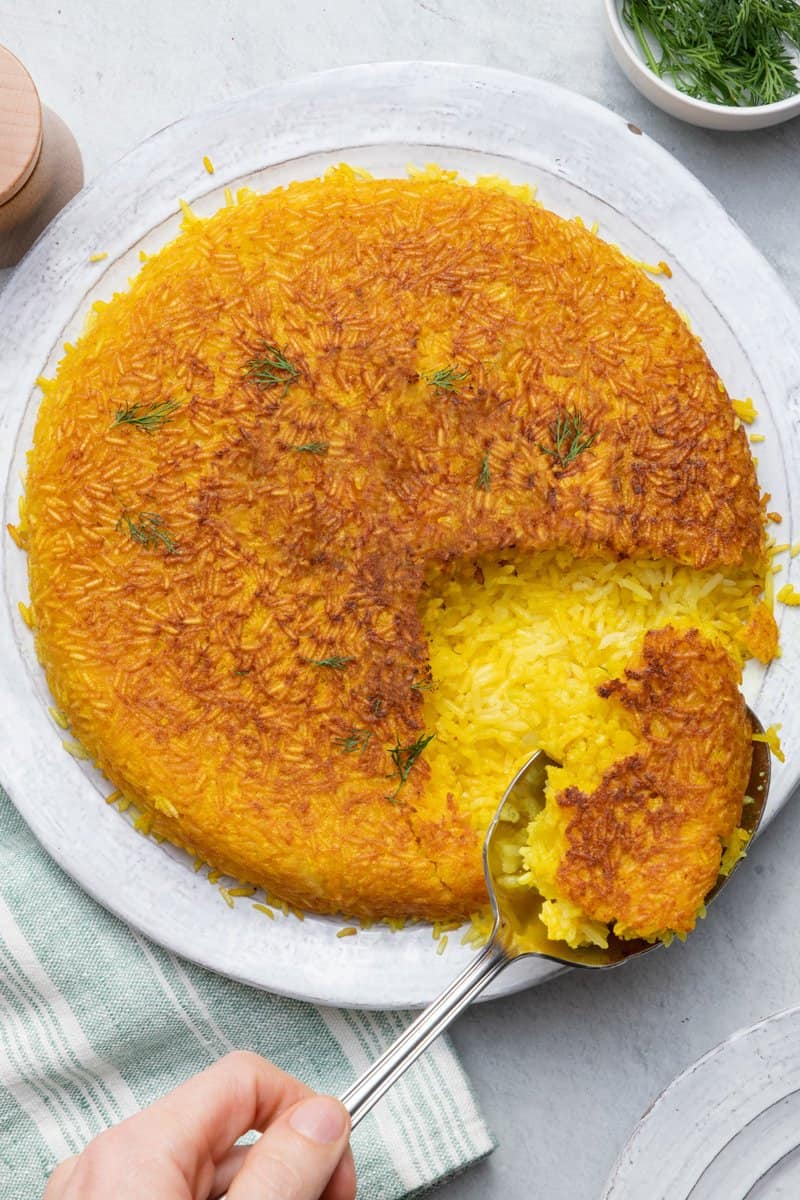
What makes Tahdig so singularly special? It's not merely the crispiness, though that's certainly a major draw. It's the unique contrast it offers: a thin, deep golden-brown, buttery, and incredibly crunchy layer that gives way to perfectly steamed, fluffy grains of rice above. This duality is what sets Tahdig apart, making every bite a journey of textures and flavors.
In Persian culture, Tahdig is often referred to as the "jewel" or the "holy grail" of a meal, the *pièce de résistance* that cooks strive to perfect. It's routinely the first dish to disappear from the table, often leading to affectionate squabbles over who gets the biggest, crispiest piece. For first-timers, experiencing Tahdig can be a revelation, a "life-altering gustatory experience" that leaves an indelible mark. It represents not just a dish, but a culinary philosophy that celebrates patience, precision, and the transformative power of simple ingredients. To truly understand its cultural significance and allure, delve deeper into
Tahdig: Unearthing Persian Cuisine's Golden Crispy Rice Jewel.
The magic happens on the stovetop. By cooking the rice directly over a heat source in a covered pot, the bottom layer caramelizes and crisps, while the steam trapped within the pot ensures the upper layers remain tender and aromatic. This ingenious method creates a culinary marvel that is both comforting and exhilaratingly delicious.
The Anatomy of Perfect Tahdig: Essential Ingredients
While the technique is paramount, the quality and combination of ingredients lay the foundation for an exceptional
Persian crispy rice. Here's a breakdown of the key components and their roles:
- Basmati Rice: This long-grain white rice is the traditional and preferred choice for Tahdig. Its distinct aroma, ability to cook into individual, fluffy grains, and moderate starch content make it ideal. While other long-grain white rice varieties can work, basmati offers superior texture and flavor. Crucially, rinsing the rice thoroughly until the water runs clear is essential to remove excess starch, preventing stickiness and promoting separate grains.
- Saffron: The "red gold" of the culinary world, saffron is non-negotiable for classic Tahdig. Its delicate floral aroma, subtle earthy flavor, and vibrant golden hue are irreplaceable. Though expensive, a small amount of bloomed saffron threads (ground and steeped in hot water or ice cubes) imbuses the Tahdig with its signature color and intoxicating fragrance. Avoid cheaper substitutes like turmeric, as they simply cannot replicate saffron's unique profile.
- Yogurt: A surprisingly vital ingredient, plain natural or Greek yogurt (preferably full-fat) plays a crucial role in achieving that deep golden, crispy crust. The yogurt adds a slight tang, but more importantly, its proteins and sugars contribute to the browning and crisping process, creating a more robust and flavorful Tahdig layer. While some variations use milk, yogurt is widely considered superior for achieving the desired crispness.
- Egg Yolk: Just the yolk is needed! The egg yolk acts as a binder, helping the rice grains stick together to form a cohesive bottom layer. It also contributes to the rich golden color and provides a slight richness to the crust, enhancing its overall texture. Save the egg whites for another culinary creation!
- Oil/Butter: A generous amount of fat is essential for achieving the golden crispness. Neutral cooking oils like vegetable or canola oil work well. However, many Persian cooks opt for a combination of oil and butter, or solely clarified butter (ghee), as it has a higher smoke point and is less likely to burn during the extended cooking time, ensuring a buttery flavor without bitterness.
- Salt: Essential for seasoning the rice, balancing flavors, and bringing out the best in the other ingredients.
Mastering the Method: The Dance of Heat and Time
Creating perfect
Persian crispy rice is less about a rigid recipe and more about understanding the principles of heat management and rice preparation. It’s an art that requires patience and observation, but the results are profoundly rewarding.
Pre-Preparation: The Foundation of Fluffy Grains
The journey begins with properly preparing the rice. Basmati rice is typically rinsed multiple times until the water runs clear to remove surface starch. It's then often soaked for several hours or parboiled briefly to ensure the grains cook evenly and separately. This initial step is critical for achieving fluffy, distinct grains that don't clump together.
Crafting the Tahdig Layer: The Golden Mixture
Once parboiled, a portion of the rice is gently mixed with the key Tahdig ingredients: the bloomed saffron, yogurt, and egg yolk. This mixture forms the base that will become the coveted crust. The proportions are important – enough to coat the rice without making it overly wet, ensuring it can crisp up effectively.
The Art of Layering and Heat Control
This is where the magic truly unfolds. A generous amount of oil or clarified butter is heated in a heavy-bottomed, non-stick pot. The Tahdig mixture is then carefully spread evenly across the hot oil, pressed down gently to form a uniform layer. The remaining plain rice is then mounded on top, often in a pyramid shape to allow for better steam circulation.
The pot is covered, and initially, the heat is kept relatively high for a short period. This crucial step "sets" the crust, initiating the browning and crisping process. You should hear a gentle sizzle. After this initial burst, the heat is significantly reduced to a low setting, and the pot continues to cook for an extended period, allowing the top layers of rice to steam to tender perfection while the bottom continues to crisp and caramelize slowly. A common tip is to wrap the lid in a clean kitchen towel to absorb excess condensation, preventing water from dripping back onto the rice and potentially making it soggy.
The Grand Reveal: Flipping Your Masterpiece
Patience is a virtue when making Tahdig. Resisting the urge to peek too often is key. Once the cooking time is complete, the pot is removed from the heat and allowed to rest for a few minutes. This allows the crust to firm up and slightly release from the bottom of the pot. The moment of truth arrives when the pot is inverted onto a large serving platter, revealing the glorious, perfectly formed golden circle of
Persian crispy rice. The collective gasp of admiration is almost guaranteed. For an in-depth dive into the intricate details that guarantee success, explore
Secrets to Crispy Tahdig: Saffron, Yogurt, and the Perfect Crust.
Beyond the Classic: Tips for Tahdig Triumph and Delicious Variations
While the classic saffron-infused
Persian crispy rice is legendary, the world of Tahdig offers room for creativity and personal preference.
Top Tips for a Flawless Crust:
- Choose the Right Pot: A heavy-bottomed, non-stick pot is your best friend. It distributes heat evenly and prevents sticking, making for an easier flip.
- Don't Skimp on the Fat: Enough oil/butter at the bottom is crucial for heat transfer and browning. It should cover the entire base generously.
- Listen to Your Pot: A gentle, consistent sizzle indicates that the crust is forming nicely. If it's too aggressive, your heat might be too high.
- Patience, Patience, Patience: Resist the urge to lift the lid too often. Every peek releases steam, prolonging cooking time and potentially affecting the crispness.
- Cool Before Flipping: Let the Tahdig rest for 5-10 minutes off the heat before attempting to invert it. This allows the crust to firm up and detach more easily.
Delectable Tahdig Variations:
The beauty of Tahdig lies in its versatility. While the rice-based version is iconic, the term "Tahdig" actually refers to *any* ingredient that forms the crispy bottom layer.
- Potato Tahdig: Thinly sliced potatoes are layered at the bottom of the pot, often seasoned with saffron, before the rice is added. This results in a wonderfully crispy and tender potato crust.
- Bread Tahdig: Pieces of lavash bread or even pita bread can be placed at the bottom, creating a delightfully chewy and crisp bread layer.
- Tahchin (Chicken Tahdig): This is a more elaborate dish where rice, yogurt, saffron, and egg are combined, then layered with seasoned cooked chicken (or other meats) at the bottom, forming a rich, savory, and incredibly crispy "cake" of rice and chicken.
- Vegetable Tahdig: Other vegetables like thinly sliced tomatoes, eggplants, or even green beans can be used to create a unique crispy base, offering different flavor profiles and textures.
Toppings can also elevate your Tahdig experience. A drizzle of additional saffron-infused melted butter, sprinkled with sautéed barberries (tart and jewel-like), or crushed pistachios adds both visual appeal and a burst of complementary flavors.
Conclusion: The Golden Standard of Persian Cuisine
Tahdig is more than just a dish; it's a celebration of texture, flavor, and culinary tradition. It embodies the Persian appreciation for meticulous preparation and the joy of sharing exceptional food. The delicate balance between fluffy, aromatic rice and its glorious, deep golden, crunchy crust makes it a truly unique and irresistible experience. Whether you stick to the classic saffron
Persian crispy rice or venture into its delightful variations, mastering Tahdig is a rewarding endeavor that will undoubtedly impress and delight anyone fortunate enough to share your table. So, embrace the challenge, hone your skills, and prepare to unveil your very own masterpiece – the ultimate golden jewel of Persian cooking.